How Transportation Access Affects Food Security in the Inland Empire
When a sidewalk is too cracked to walk on or a bus route gets cut, the impact goes beyond inconvenience. For thousands of Inland Empire families, transportation barriers are the reason they cannot reach fresh, affordable food.
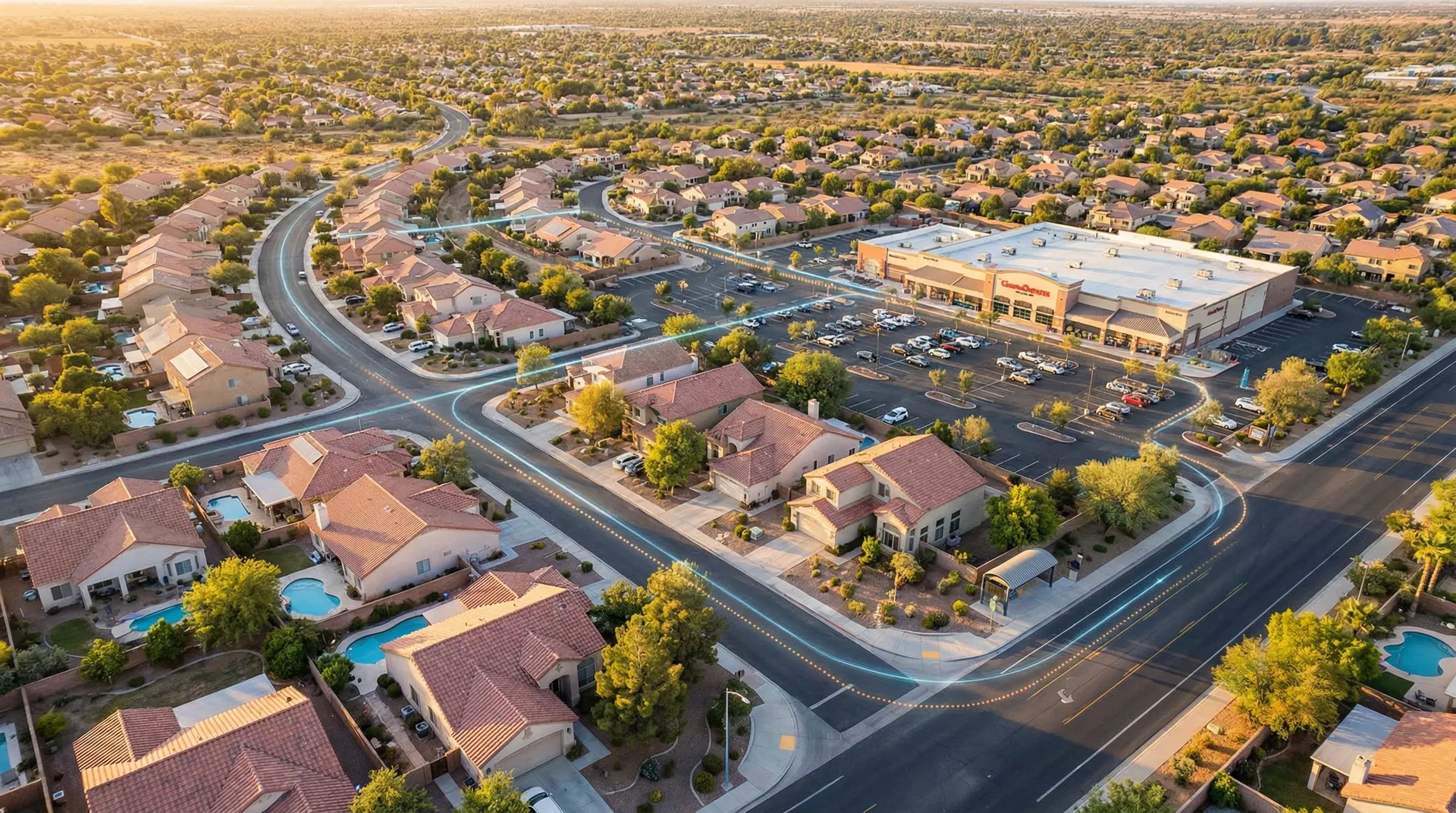
When we talk about food insecurity, the conversation usually centers on income. Can a family afford groceries? But in the Inland Empire, there is a second question that matters just as much: Can a family physically get to a grocery store?
For thousands of residents across Riverside and San Bernardino counties, the answer is no. Not because stores do not exist, but because the infrastructure connecting homes to food sources is broken, incomplete, or missing entirely.
The Numbers Behind the Problem
The Inland Empire is home to over 4.6 million residents spread across more than 27,000 square miles. It is one of the fastest-growing regions in California, but its transportation infrastructure has not kept pace with that growth.
According to the USDA's Food Access Research Atlas, significant portions of both Riverside and San Bernardino counties qualify as low-access food areas, meaning residents live more than one mile from a supermarket in urban areas or more than 10 miles in rural areas. When you combine low access with low income, you get what researchers call a food desert.
The Inland Empire has dozens of them.
| Factor | Impact on Food Access |
|--------|----------------------|
| Missing or damaged sidewalks | Pedestrians cannot safely walk to nearby stores |
| Limited bus routes | Families without cars have no reliable transit to grocery stores |
| Long commute times | Workers spend 2+ hours commuting, leaving no time to shop for fresh food |
| Sprawling geography | Stores are spread far apart, making car-free access nearly impossible |
Sidewalks Are Part of the Food Access Equation
This might sound surprising, but sidewalk conditions directly affect whether families can access food on foot. In Riverside alone, our analysis of city data found 1,189 unresolved sidewalk damage reports, with some locations waiting over 17 years for repair.
If you are a senior citizen, a parent pushing a stroller, or a person using a wheelchair, a cracked or missing sidewalk is not a minor inconvenience. It is a barrier that forces you to choose between risking injury or skipping the trip entirely.
Our Sidewalk Reporter tool allows community members to document and map sidewalk damage in their neighborhoods. The goal is to build a complete picture of pedestrian infrastructure gaps so we can advocate for targeted repairs in the areas that need them most.
Check the live Sidewalk Map to see every reported location.
Transit Gaps Create Food Deserts
The Inland Empire's public transit system, operated primarily by Riverside Transit Agency (RTA) and Omnitrans in San Bernardino, covers a vast geographic area. But coverage does not equal access. Many routes run infrequently, stop early in the evening, and do not connect residential neighborhoods directly to grocery stores or food banks.
For a family relying on public transit, a grocery trip that would take 10 minutes by car can take over an hour each way by bus, including transfers and wait times. That math does not work for a working parent juggling multiple jobs and childcare.
The result is predictable: families in transit-poor areas rely on convenience stores, fast food, and dollar stores for their daily meals. These options are more expensive per calorie and far less nutritious than what a full-service grocery store offers.
What Feeding America Inland Empire Is Doing
While infrastructure improvements take years, hunger cannot wait. That is where organizations like Feeding America Riverside | San Bernardino (FARSB) step in.
FARSB distributes over 3.1 million pounds of food every month through a network of more than 250 partner agencies across the Inland Empire. Their work includes mobile food pantries that bring fresh produce directly to underserved neighborhoods, reducing the transportation barrier entirely.
Since 1980, FARSB has been the primary food bank serving both Riverside and San Bernardino counties. Their approach recognizes what the data confirms: getting food to people is just as important as making food available somewhere in the region.
Every Place Counts proudly supports FARSB through our community referral partnership. If you are able to contribute, every $1 donated provides 5 meals to IE families facing food insecurity.
The Connection Is Clear
Transportation access and food security are not separate issues. They are two sides of the same coin. When a city neglects its sidewalks, cuts bus routes, or fails to plan transit connections to essential services, the people who suffer most are those who were already struggling.
In the Inland Empire, that means:
What You Can Do
Report sidewalk damage. Use our Sidewalk Reporter to document broken sidewalks in your neighborhood. Every report strengthens the case for infrastructure investment.
Support local food access. Consider donating to Feeding America Riverside | San Bernardino to help bridge the gap while infrastructure catches up.
Engage with your community. Join the conversation on Every Place Counts. Share your experience navigating food access challenges, vote in community polls, and help us build a more complete picture of what the Inland Empire needs.
Contact your representatives. The data is clear. Share it with your city council member and ask what their plan is for connecting underserved neighborhoods to essential services.
Frequently Asked Questions
What is a food desert?
A food desert is an area where residents have limited access to affordable, nutritious food. The USDA defines it as a low-income census tract where a significant share of residents lives more than one mile from a supermarket in urban areas or more than 10 miles in rural areas.
How does transportation affect food security?
Without reliable transportation, families cannot reach grocery stores, food banks, or farmers markets. This forces reliance on nearby convenience stores and fast food, which offer fewer healthy options at higher prices per calorie.
What is Every Place Counts doing about this?
We are building community tools like the Sidewalk Reporter and Sidewalk Map to document infrastructure gaps. We also partner with organizations like Feeding America IE to support direct food access while advocating for long-term infrastructure improvements.
How can I help?
Report sidewalk damage in your area, support Feeding America IE, and engage with your local representatives about transportation and food access in your neighborhood.
This article was produced by Every Place Counts using publicly available data from the USDA Food Access Research Atlas, City of Riverside open data, and Feeding America Riverside | San Bernardino. We believe that informed communities build stronger, healthier neighborhoods.